I have spent more than thirty years in sales, and during that time I have learned a lot about people. One of the most important lessons I have learned is that you cannot sell someone something until you understand what they are looking for. You can believe completely in what you have to offer, but if you never take the time to understand what the person sitting across from you is truly looking for, you are probably going to lose his interest before you even realize it. I believe this is a lesson we sometimes forget when a man walks through the doors of our Lodge.
I understand why we get excited when a prospective candidate visits our Lodge. Membership in many Lodges is not what it once was, and naturally we are concerned about bringing new men into the Fraternity. Unfortunately, that concern can cause us to move too quickly, sometimes placing a petition in front of a man before we really know anything about him. One thing I have learned in sales is that the harder you push for the sale, the more likely you are to lose it. By trying too quickly to turn an interested visitor into a petitioner, we may make him feel pressured while giving the impression that we are more interested in gaining a member than getting to know the man.
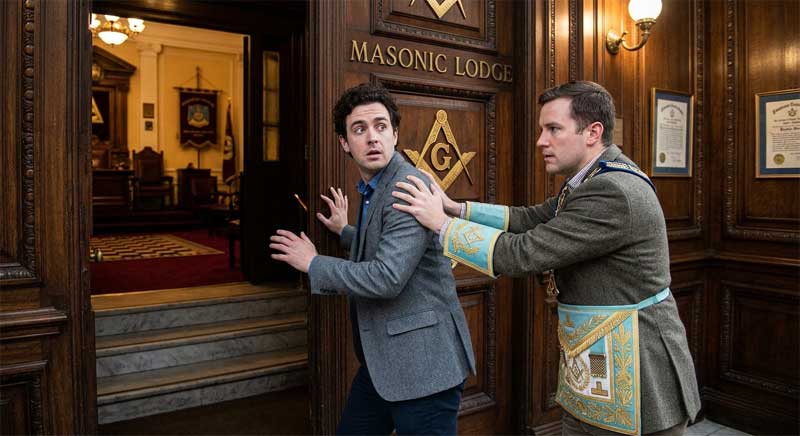
I also believe that when we move too quickly, we do a disservice to Freemasonry. We risk making membership appear no different than joining any other social or fraternal organization. Becoming a Mason should mean something. A man should come to us of his own free will and accord, be found worthy by the Brethren, and ultimately be accepted into the mysteries of our Craft. Masonry offers something different from other organizations. It is a tradition built upon initiation, symbolism, moral instruction, and the lifelong pursuit of becoming a better man. We should never allow our concern over membership numbers to diminish the value of what we offer.
This is where I believe my experience in sales can teach us something. I learned a long time ago that my first responsibility is not to talk, but to listen. Before I can determine whether I have something of value to offer, I need to understand what brought that person to me and what he is actually looking for. We should approach a prospective candidate in much the same way. Instead of immediately telling him what Masonry has done for us, ask what brought him to our door. What sparked his interest in Freemasonry? What does he hope to find here? Then we need to listen to his answers.
Those conversations allow us to understand not only the man, but also what he believes he will find in Freemasonry. His expectations may be exactly in line with what our Fraternity offers, or they may be completely different. Either way, we have an opportunity to be honest about what Masonry is, what it is not, and what will eventually be expected of him. We should be trying to determine whether what he is seeking and what Masonry offers are truly a good fit.
That process takes time, and there is nothing wrong with allowing a man to visit several times before anyone puts a petition in front of him. Invite him to dinner, introduce him to the Brothers, and take the time to learn about his family, his work, and his interests. Let him ask questions and become comfortable around the Lodge while we have the same opportunity to get to know him. If becoming a Mason is intended to be a lifelong commitment, there should be no rush on either side. Ideally, he should eventually reach the point where he asks us for a petition because he has decided for himself that Freemasonry is something he wants to pursue. At that point, we have not had to convince him or pressure him into taking the next step. We have simply given him the time and opportunity to make an informed decision.
Perhaps we simply need to stop trying so hard to sell Masonry. Too often, we spend more time telling a prospective candidate what Masonry has done for us than listening to what brought him to us. There is nothing wrong with sharing our experiences when asked, but otherwise we risk making the conversation about ourselves. Our focus should remain on the man sitting across from us and understanding what he is looking for.
When a man first enters our Lodge, our concern should not be how quickly we can get a petition into his hands. In sales, we are usually concerned with first understanding what the person truly wants and determining whether we can provide it. Masonry should be no different.
If we take the time to understand who the man is, what he is searching for, and why he came to us, we have a better opportunity to help him find what he is seeking. In the end, that will not only make for a stronger Lodge, but a stronger Fraternity. Before we concern ourselves with getting him to knock on the door of Freemasonry, perhaps we should first understand why he came to the door at all.
WB Robert Easton, PM


